
Navigating the AI hype versus on-the-ground reality
I want to write a blog post about the efficiency and productivity gains that are to be had through the implementation of artificial intelligence to how people work every day. In this post I’ll talk a lot about software development because that seems to an early indicator or a “canary in the coal mine” re what may or could happen to the future of work for roles other than software development. I’m writing this post without the use of AI and I’m doing that on purpose. In fact, it’s going to part of my new practice about how I go about communicating and writing. So that my voice and ideas come through authentically without the need to edit, discuss and debate with a robot about whether what I write sounds like my voice or represents my thoughts in the right way or not.
I’m currently working right in the middle of how software development is being impacted by AI; I’m helping hundreds of engineers across organisations deal with its impact on IT delivery while at the same time trying to capture the benefits for those sponsoring the investment in these technologies. It’s an interesting tension. On some occasions I hear a narrative that’s more around improving the developer or engineering experience of work. Another often competing narrative is the drive for efficiency and reducing the cost of doing business; this is a constant challenge regardless of whether you’re a for-profit company, government business entity, government department or in the not-for-profit space trying to manage the shifting landscape on how charities work.
There was a really good article recently published on the ABC about some research that was conducted in November 2025 where they did a comparison for software development using AI tools versus coding manually, what was interesting about this was how the developer perceived their efficiency gains from using AI.
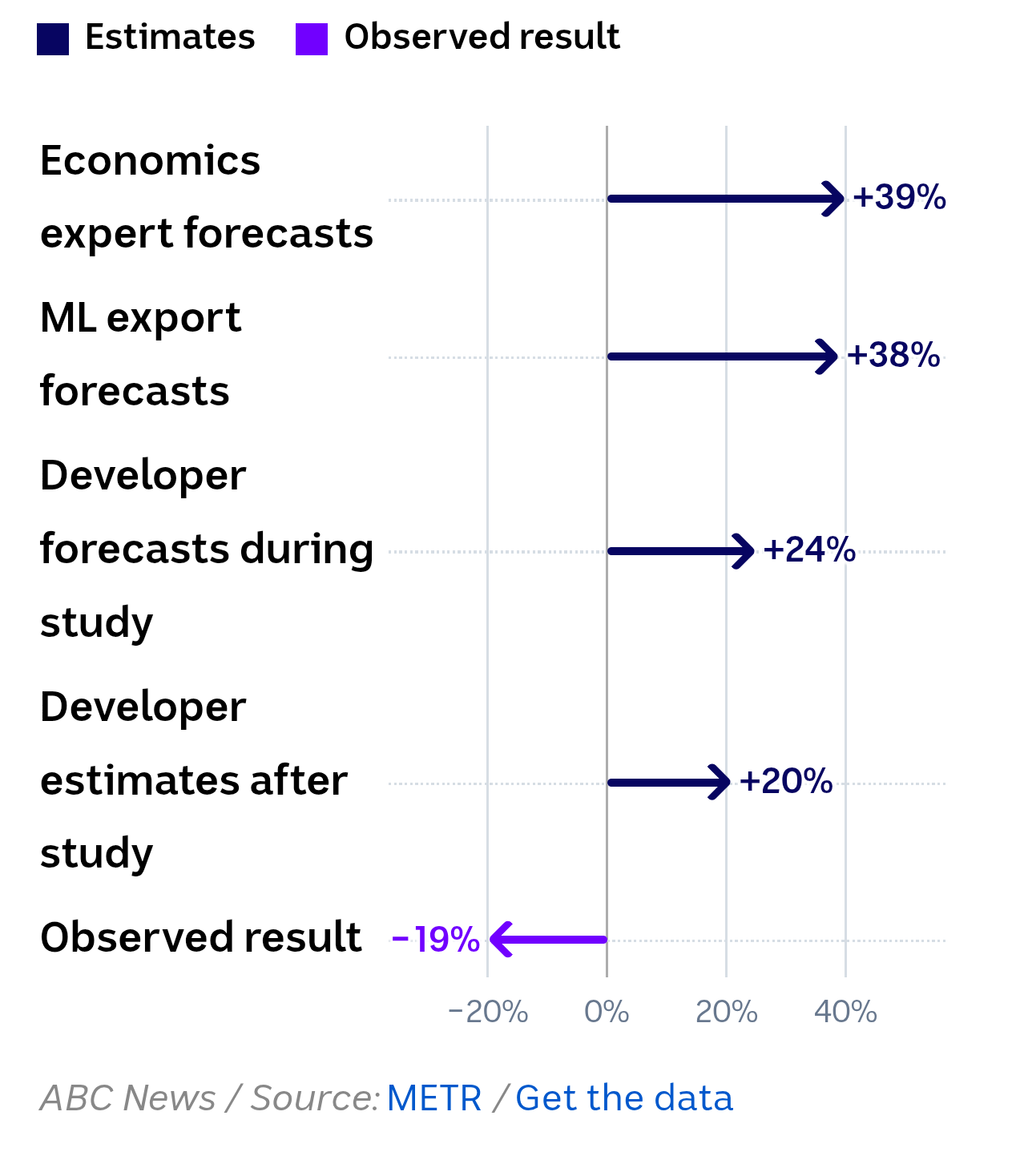
Developers reported a 20% improvement in productivity. But the reality using time and motion measurement was that they were closer to 20% reduction in productivity. What’s interesting is they attempted to rerun the study this year using AI tools that have just been released in the last few months and they came up against an interesting challenge; software developers were no longer willing to go back and develop software manually, so the researchers couldn’t get a baseline to compare AI-augmented software development against manual only coding. This is not only fascinating and interesting but very typical of the pace of change that is throwing off managers, executives and leaders on just how to navigate and make decisions in such a fast-changing evolving landscape.
Just when you thought the concept of productivity was hard enough to understand, we can mix in the fact that a lot of technology firms are currently shedding roles and doing what has been called “AI washing” where redundancies are described as a productivity gain from AI, whereas they’re really just downsizing after over recruiting post-COVID.
In summary I believe we need to accept and acknowledge that we are in an unknown space that’s moving so quickly and is so complex with so many multifaceted elements, that it’s very hard to give a predictive answer on whether AI has the espoused benefits or it’s really overcooked. And if it is overcooked, then by how much are the benefits being exaggerated relative to the reality.
I feel I am privileged to at least be experiencing this as a practitioner who is passionate around ways of working, delivery performance, productivity whilst respecting the humans in the system for the role they play.
The way I am dealing with this and the way I’m coaching, supporting and advising leaders, executives and management is to try and stay fact-based as much as we can, use data where it’s available. The key is to be brutally open and transparent about exactly what use cases can be tangibly executed and not just talked about hypothetically in a business case or in a slide pack or in a process flow diagram or on some advertised AI miracle functionality sold by a vendor. My advice is to go down and look at the work instruction level (level five processes) to observe the measurable ways of working at the coalface. Go watch a dev work with AI.
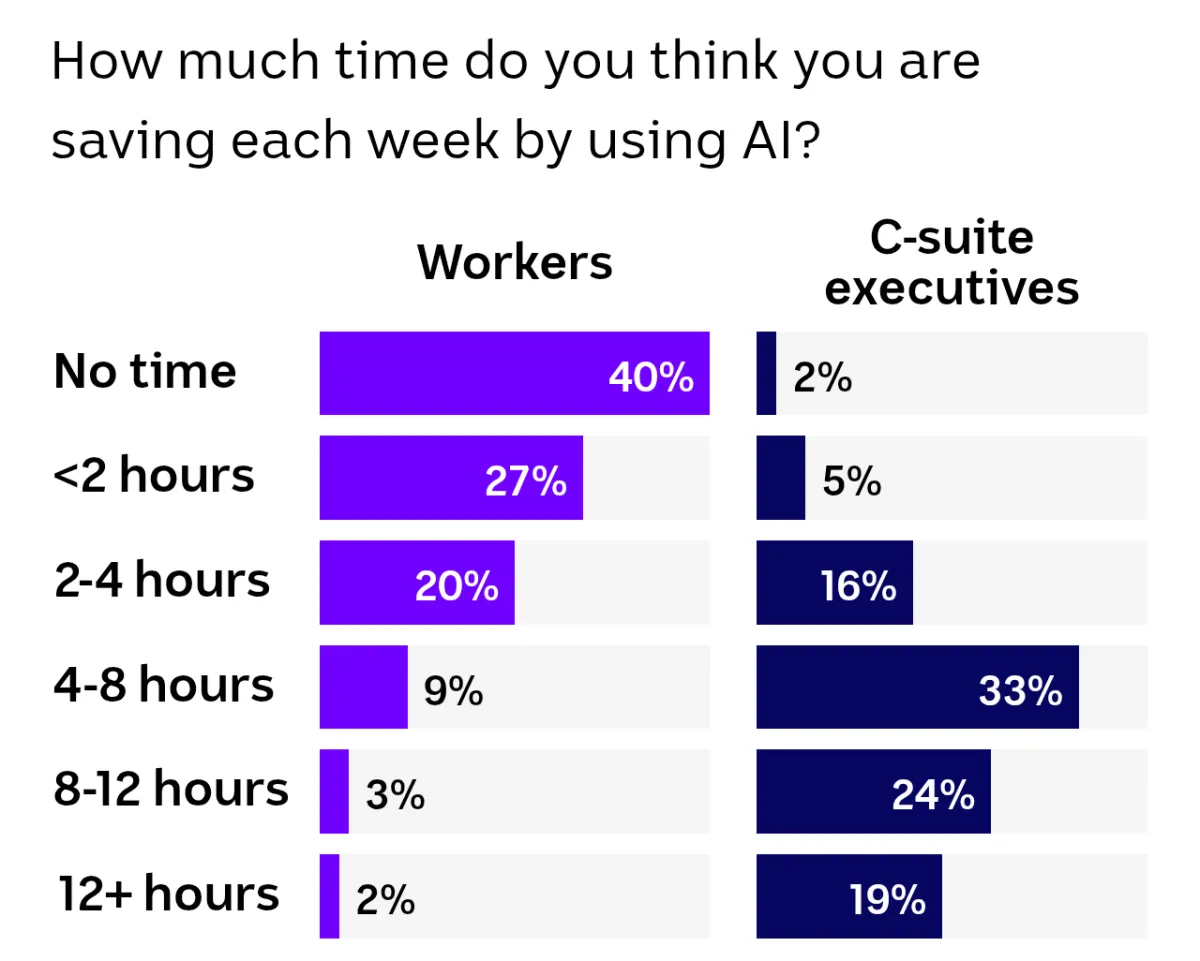
I’ll leave you with what seems to be an apparent top-down versus bottom-up mismatch on the perception of what AI can do. In the ABC article I referenced above the graph below indicates that the people using AI tools have a fundamentally different perspective than the people managing and leading on exactly what the benefits are for the adopting AI.
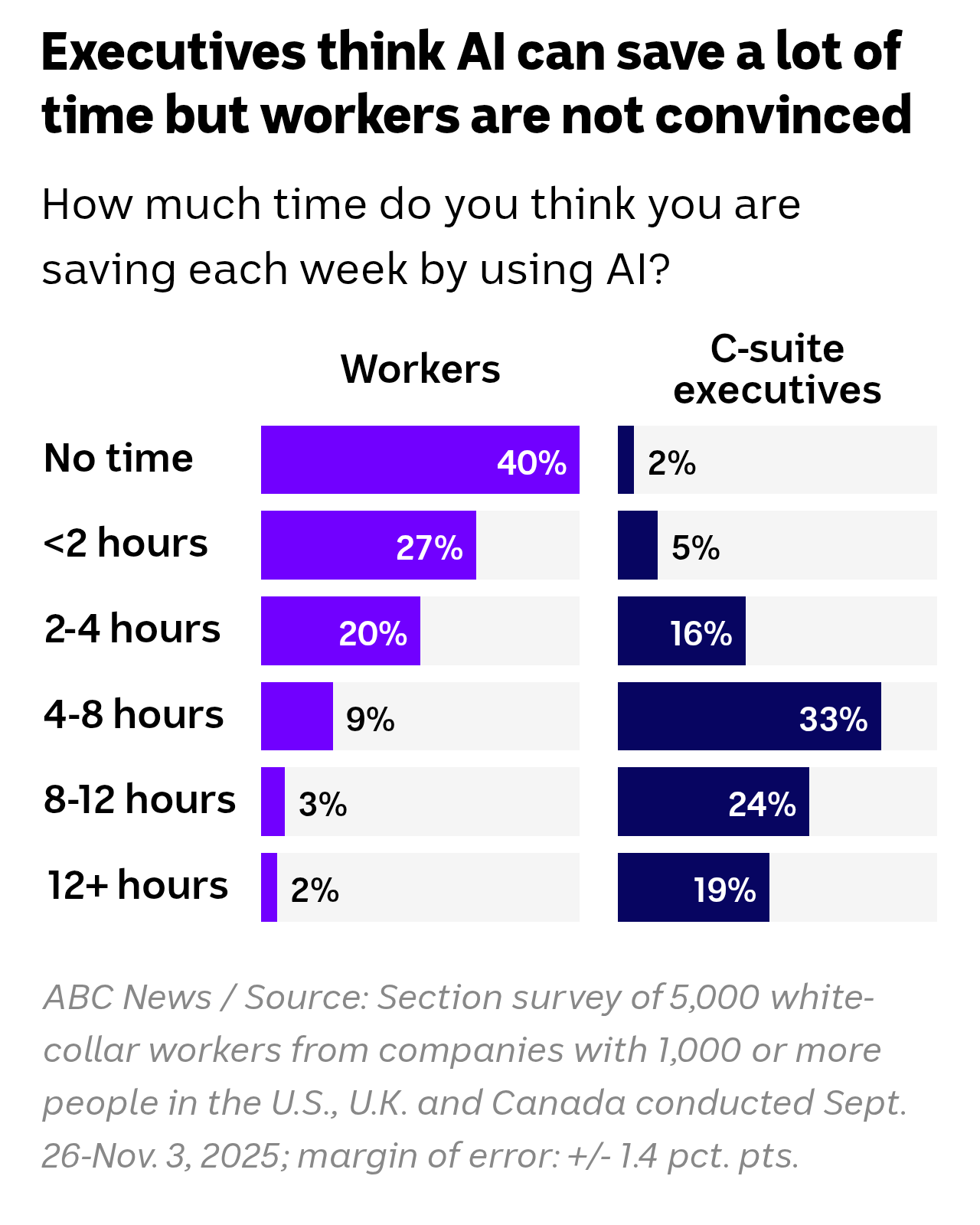
What’s interesting is the people who are making the decisions around redundancies, headcount, investment in AI and expected benefits may have a distinctly different perception from what’s really happening at the coalface and that I think is the job that people like myself and practitioners who in “work in the middle” between leadership vision on the ground pragmatic delivery.
My advice is to hold these two perspectives at the same time and continually stick with what’s real while having one eye on the future about what might become. That way we can navigate the realities and the opportunities of AI without getting lost in the hyperbole.